What Cin7 Summit 2026 Taught Me About Software That Actually Delivers
If you've ever bought software that promised to run your whole business and then quietly delivered about half of that, you already understand the most useful thing I heard in Denver this month.
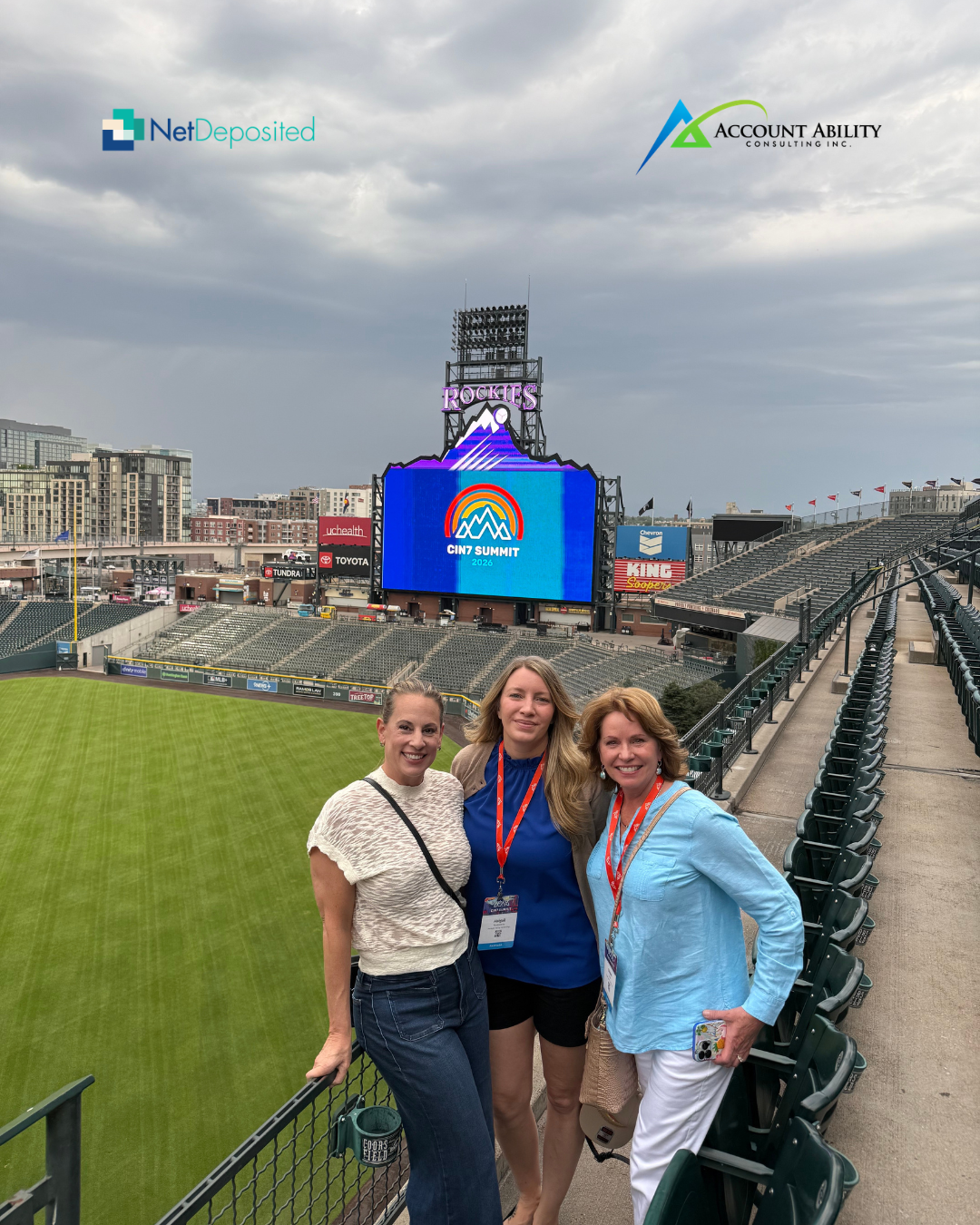
I spent three days at Cin7 Summit 2026 — Cin7's gathering for product-based businesses and the people who help run their operations — under this year's theme, The Future in Stock. There were keynotes, live product reveals, a room full of showcase brands, and the "adult summer camp" energy the organizers were clearly going for. Plenty of it was just fun. But a few things genuinely shifted how I'm thinking about the work we do for inventory businesses, and they're worth passing along even if you'll never set foot at a software conference.
Left to right: Rachel Dauchy, Abby Rocheleau, Susan Cook
Owners of Account Ability Consulting Inc.
The Best Advice I Heard Had Nothing To Do With A Feature
The moment that stuck with me most came from Josh Fischer, Cin7's VP of Product. He told a story about how someone asked whether the product could do a particular thing. Instead of promising it on the spot, Josh described how he actually operates: he takes the ask, weighs what's genuinely involved, and answers with the truth. If the tool can do it, great — they'll do everything possible to make it happen. If the technology isn't there yet, it isn't there yet, and he says so.
That sounds obvious. It is shockingly rare.
If you run a product business, you've almost certainly been on the receiving end of the opposite. A rep promises the moon, you sign, and then the people responsible for actually implementing the thing spend months trying to bend reality to fit a promise made in a demo. The headaches almost never come from the tool itself. They come from the gap between what was promised and what was possible.
I say this as someone who lives on the implementation side of that gap. I started my career as an accountant, and these days I spend most of my time as an implementer — the person who makes the software actually do what a business needs. When a client comes to us with a very specific problem ("QuickBooks can't handle this," or "my inventory system won't do that"), the honest answer is sometimes here's exactly how we solve it and sometimes the tech isn't there yet, so here's the best workaround for now. Neither answer is glamorous. Both are a lot less painful than a promise nobody can keep.
The takeaway for you as an owner: when someone's selling you a system — or selling you on to the person who'll set it up — the honest "here's what this can and can't do today" is worth more than the confident "it does everything."
Trust the one that tells you the tradeoffs.
The Ai Conversation Was About Money Leaks, Not Magic
The other theme of the summit — and honestly of the whole industry right now — was AI. What I appreciated was that Cin7 framed it around a refreshingly un-hypey question: what can this actually do for your business today, not someday?
Josh's answer centered on two problems most product businesses feel in their gut: bottlenecks and money leaks.
"Money leaks" is a good phrase, because that's exactly what they are — money quietly slipping out where you can't easily see it. A best-seller that stocks out for two weeks during your busiest month, so the sales just… don't happen. Cash frozen in a pile of the wrong inventory that isn't moving. Hours of staff time lost to typing purchase orders by hand. None of it shows up as a dramatic line on your P&L. It just makes you a little less profitable, quietly, all year long.
A couple of the demos made this concrete. One showed AI reading a purchase order and entering it in about 45 seconds instead of the six-plus minutes it takes a person — and flagging anything it wasn't sure about instead of guessing.
Another centered on ForesightAI, Cin7's demand-forecasting tool, which really just answers the most expensive question in any inventory business: how much of this do I actually need to buy, and when?
Here's why that matters more than it sounds like it does: in an inventory business, your stock is cash — cash you can't spend, sitting on a shelf. Order too much and you've tied up money you might need for payroll or your next launch. Order too little and you miss sales you'll never get back. Better forecasting isn't a nerdy nice-to-have; it's the difference between your cash working for you and your cash napping in a warehouse.
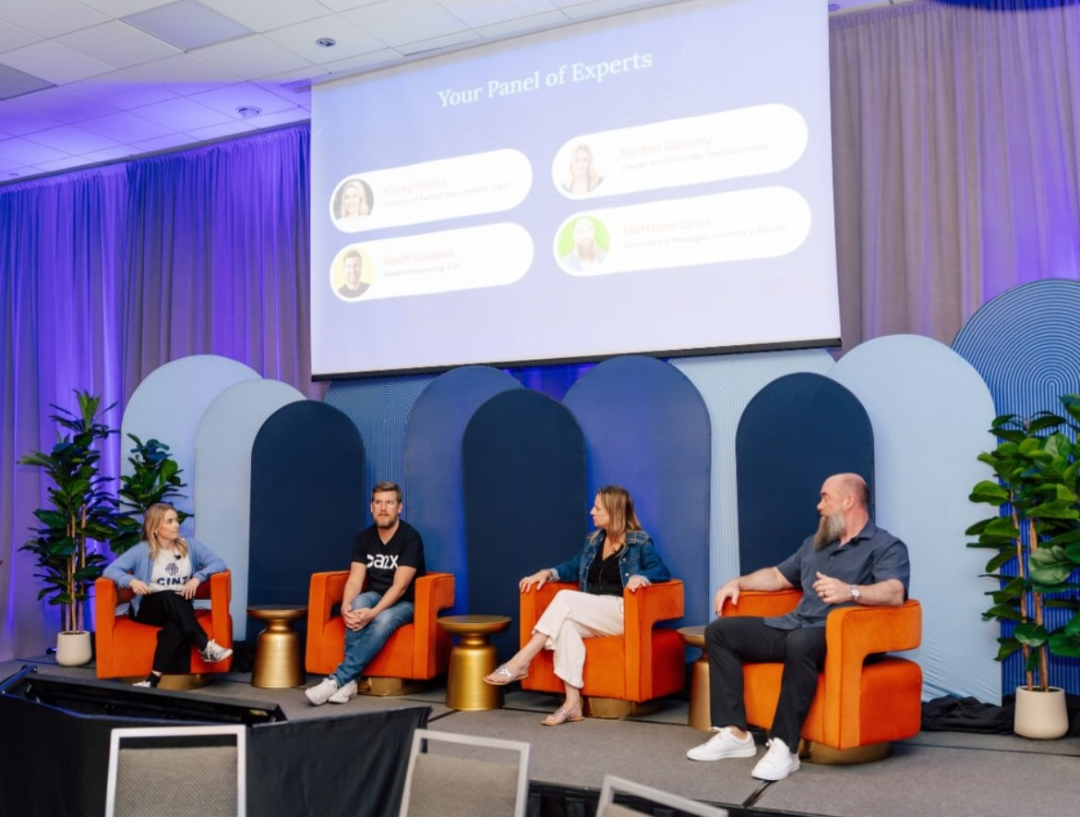
Your Books and Your Operations Aren't Two Separate Worlds
I also got to speak on a panel about the relationship between accounting and operations — which is, not coincidentally, my favorite subject. It's the whole reason NetDeposited exists, sitting right where automation and accounting meet.
Here's what owners don't always see: your operations system and your accounting system are telling the same story, or they should be. Your inventory platform knows what you sold, what it cost, and what's left. Your books turn that into the numbers you make decisions on. When those two systems don't talk — when your sales live in one place, your fees and refunds in another, and your books are a best guess assembled after the fact — you end up making real decisions on numbers that don't quite reconcile.
When they do talk — when your inventory system feeds your accounting system cleanly, with tools built to translate ecommerce activity into proper books along the way — you get one version of the truth instead of three conflicting ones. That's not a technical detail. That's the difference between "I think we can afford to restock" and "I know we can."
Getting to trade notes on exactly this with people like Matt Lynn at Belay, Geoff Gualano at A2X, and Kinley Shotts at Cin7 was a highlight. Systems integration is genuinely my thing, and there's a whole community of people obsessed with making these tools work together well.
A Couple Of Things I'm Still Geeked About
We also met Cin7's new CEO, Sheldon Cummings, and I got to talk with him directly — he was genuinely interested in my input on Cin7 Payments, which tells you something about the direction he's steering. And I'll happily admit I came home with a longer to-learn list than I arrived with. An accountant who became an implementer never really runs out of things to master, which is exactly why showing up for a community that does this well is worth the trip.
What I Brought Home For My Clients
If there's one idea I carried back, it's that growing a smaller product business into a real mid-market operation is genuinely doable right now — not because AI is magic, but because the tools have gotten honest, capable, and connected. The right stack — a solid inventory platform like Cin7, forecasting like ForesightAI, clean books in QuickBooks Online, and the connectors that tie them together — can carry a business much further than it could even a couple of years ago, as long as it's built around what those tools can actually do today.
Which brings me back to Josh's point. The goal was never software that promises everything. It's software that delivers what it promises — set up by people who'll tell you the truth about which is which.
If your inventory system and your books don't quite line up, and you're tired of making decisions on numbers you're not sure you trust, that's exactly the kind of conversation we love at NetDeposited.
No moon-promising involved.
- Rachel Dauchy