Amazon accounting comes with its own set of challenges. Between settlement reports, marketplace fees, refunds, inventory, and reconciliation, there are a lot of moving pieces to manage.
And while you can handle much of it manually, that doesn't necessarily mean you should.
The right technology can make Amazon accounting more accurate, efficient, and manageable. If there's one thing I've learned from working with different accounting apps, it's that more technology doesn't always mean better accounting. It's about choosing tools that work together and support the way your client's business operates.
Here are a few things to consider when building an Amazon accounting tech stack.
Start With a Reliable Sales Data Connector
One of the first tools to consider is a connector that brings Amazon sales activity into your accounting software.
Amazon deposits don't represent total sales. They're the net amount after fees, refunds, adjustments, and other transactions have been factored in.
A good connector helps capture those details accurately without requiring you to manually sort through settlement reports.
When evaluating a connector, look for:
Accurate transaction categorization
Summarized accounting entries
Account mapping
Reconciliation
Multi-channel support
The goal isn't simply to get the data into your ledger… it's to make sure that data is accurate, organized, and easy to reconcile.
I like A2X
One tool worth considering is A2X, an eCommerce accounting integration that connects platforms like Amazon and Shopify with QuickBooks Online and Xero.
A2X takes marketplace settlement data and organizes it into summarized accounting entries, breaking out sales, refunds, fees, taxes, and other transactions.
Rather than manually calculating what happened between a sale and the final bank deposit, accountants can use those entries to help reconcile payouts and maintain more accurate financial records.
For Amazon sellers, this can reduce manual data entry and make it easier to understand the activity behind each settlement.
Of course, A2X is one piece of the accounting workflow. You'll still need to consider inventory, cost of goods sold, and the other systems supporting the business.
Inventory and COGS
Inventory is another important consideration, particularly for Amazon sellers using Fulfillment by Amazon (FBA), managing multiple sales channels, or selling bundled products.
Depending on the complexity of the business, basic inventory features in accounting software may not be enough.
When evaluating inventory tools, consider whether they can support:
Inventory tracking across sales channels and locations
Accurate inventory valuation and costing methods
Cost of goods sold (COGS) reporting
Integration with your accounting software
Consistent data without duplicate transactions
The important thing is making sure inventory, sales, and accounting systems work together. If those systems are reporting different numbers, it becomes difficult to trust your financial reports.
I like Cin7
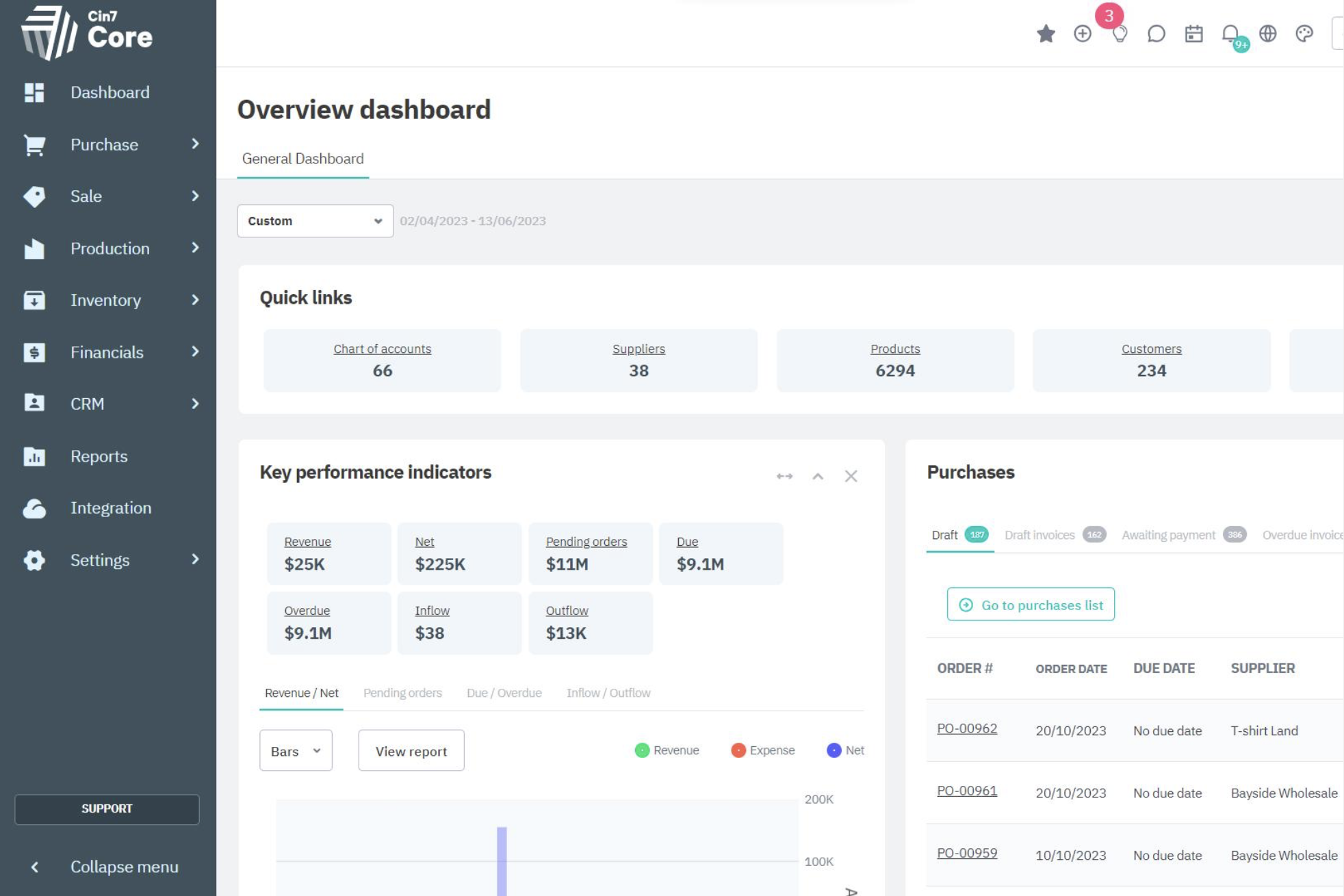
When it comes to inventory management, Cin7 is great for eCommerce businesses with more complex inventory needs.
Cin7 Core helps businesses manage inventory, purchasing, sales orders, and fulfillment across multiple sales channels and locations. It can also integrate with accounting software like QuickBooks Online and Xero, helping keep inventory activity and financial records aligned.
What I like about Cin7 is that it goes beyond simply tracking how many products are in stock. It helps businesses manage the entire inventory process, from purchasing and receiving products to tracking inventory costs and managing orders.
For businesses dealing with multiple warehouses, sales channels, or more complicated inventory workflows, having those processes connected can make a big difference in maintaining accurate inventory records and understanding cost of goods sold.
Of course, not every business needs a full inventory management system. It depends on the complexity of their operations and what they're trying to accomplish.
More Apps Don't Always Mean Better Accounting
It's easy to get caught up in all the technology available to eCommerce businesses.
But more apps can also mean more opportunities for duplicate data, integration errors, and confusion about which system has the correct information.
Before adding another tool, consider how your client operates. How many platforms do they sell on? What's their sales volume? How complex is their inventory? What processes are already working?
There is no one-size-fits-all solution.
For example, A2X and Synder can help connect eCommerce sales data with accounting software, while inventory solutions like Cin7, Katana, Fishbowl, and Finale Inventory offer different capabilities depending on the business's needs. Other tools, like Avalara for sales tax automation, Ramp for expense management and bill payments, or Amalgam for accounting automation and reporting, may help address specific challenges.
The key is understanding what each tool does, how it fits into the overall workflow, and whether it solves a problem for the business.
And remember, automation still requires oversight. Integrations need to be configured correctly, transactions need to be reviewed, and discrepancies need to be investigated.
Technology can reduce manual work, but it doesn't replace an accountant's understanding of the numbers.
Build Your Tech Stack Around the Business
The best Amazon accounting tech stack isn't necessarily the one with the most features or the most integrations. It's the one that helps you maintain accurate financial records, simplify workflows, and provide meaningful reporting.
Start with a reliable sales data connector, evaluate your inventory needs, and make sure the tools you choose work together.
When your accounting systems are running efficiently, you can spend less time troubleshooting transactions and more time helping clients understand their profitability, cash flow, and opportunities for growth.
Need help simplifying your Amazon or eCommerce accounting? NetDeposited helps businesses streamline their accounting processes, manage inventory, and gain better visibility into their financial performance. Let's talk about what your business needs.